Practice guide
A Complete, Unhurried Full-Body Practice
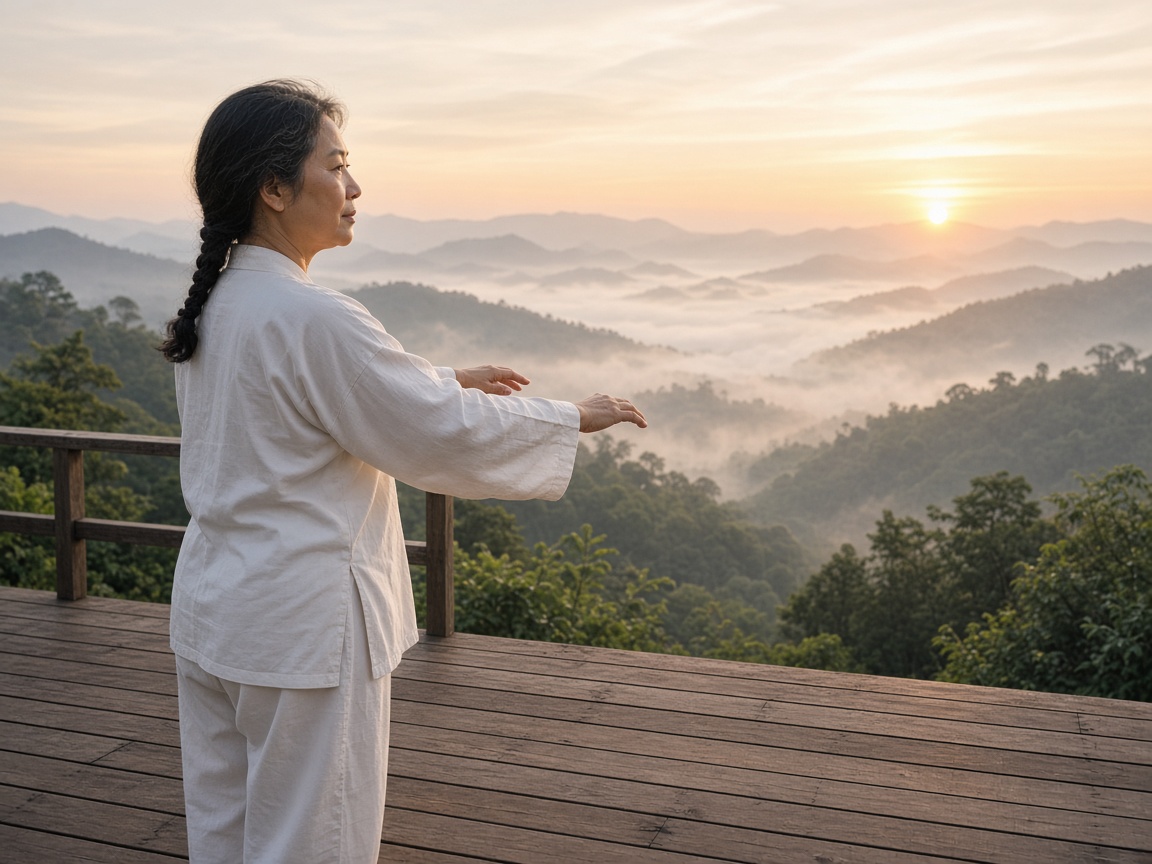
On a quieter morning or a weekend, you can join a warm-up, a full set of slow movements, and a close into one sitting. It is still a gentle practice, only more spacious. You do not need to work until you are tired.
Who it is for
- People who already know a short practice and want to try a fuller shape.
- Anyone with a longer stretch of time, who would rather move slowly all the way through.
- Those who like a clear beginning, middle, and close.
A short at-home outline
Suggested time: About 40–50 minutes. Shorten the session or make the movements smaller if that suits you better today.
- Spend five to eight minutes warming the joints and walking slowly, until the breath feels even.
- For the next twenty to thirty minutes, string together the slow movements you know, covering the feet, legs, back, arms, and neck, and leaving time to breathe in each one.
- If you feel tired, make the movements smaller or switch to a seated version. You do not have to keep the original stance.
- Close with five to ten minutes of light patting or quiet standing, then sit and breathe.
If you do not have the time, return to “A Gentle Daily Practice at Home.” Completeness is not the same as intensity. Stop and rest if you feel pain, dizziness, or unusual shortness of breath.
A note before you practice
The notes on this site are suggestions for gentle movement and breathing at home. They are for everyday activity only, and they are not a substitute for medical diagnosis, treatment, or rehabilitation.
If you have an injury, are pregnant, are recovering from surgery, or live with a chronic condition, please ask a qualified clinician before you decide whether to practice.
Stay in a comfortable range. Stop at once if you feel pain, dizziness, unusual shortness of breath, or any other unexpected discomfort.
How practice feels varies from person to person. Nothing here promises a particular result, and none of it should be read as a claim of treatment.