Practice guide
Breathing Basics: Slowing the Breath
Breathing practice does not need a special technique. Find a quiet place to sit, let the inhale arrive naturally, and let the exhale lengthen a little. That is often steadier than chasing an unusual method.
Who it is for
- People who want a quiet complement to movement practice.
- Anyone working in a small space who can only sit.
- Those who feel too tired in the evening for larger movements.
A short at-home outline
Suggested time: About 8–15 minutes each time. Shorten the session or make the movements smaller if that suits you better today.
- Sit on the front third of a chair, or on a cushion, with both feet on the floor. Let the spine rise naturally and drop the shoulders.
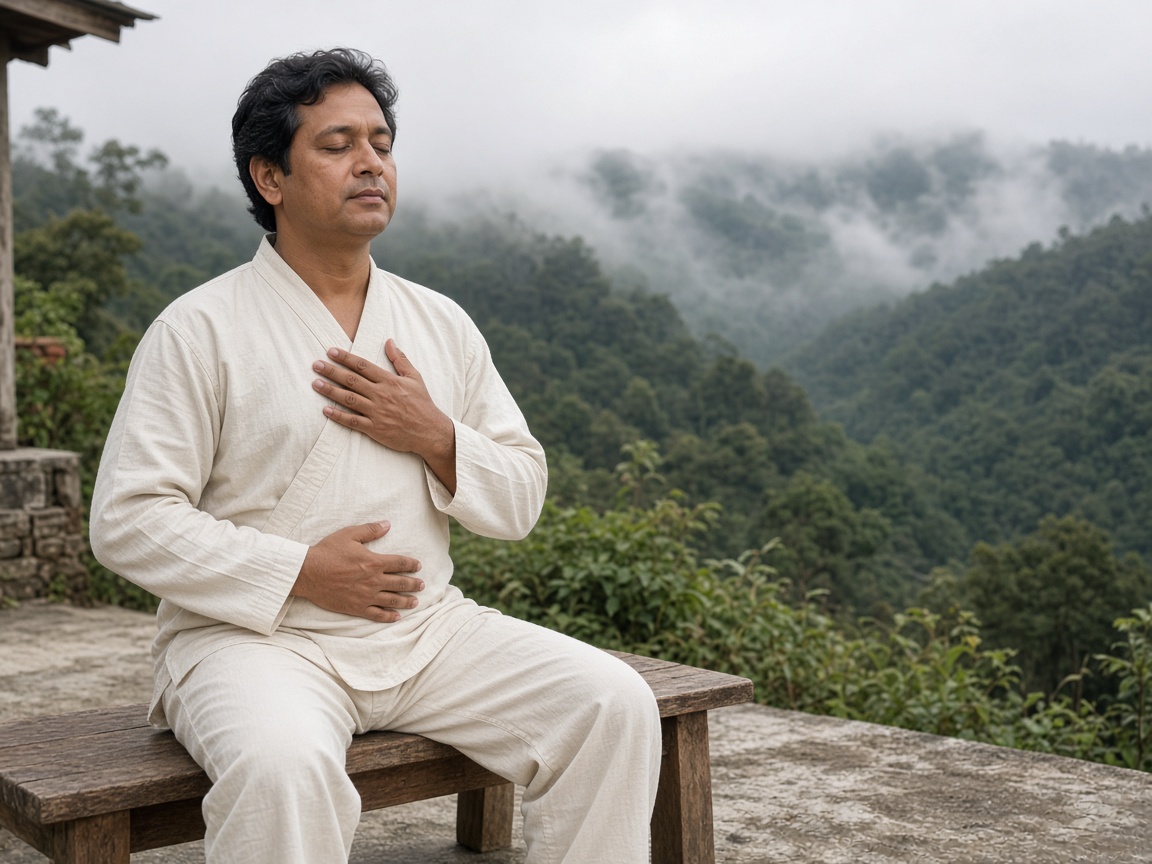
- Rest one hand on the abdomen and one on the chest. Watch a few ordinary breaths without trying to change them.
- Then let the nasal inhale be a little fuller and slow the exhale. Allow the abdomen to rise and fall gently; do not force it outward.
- Stay for eight to fifteen minutes. If you feel tight in the chest or uneasy, return to your usual breathing and open the eyes.
Do not hold the breath on purpose for long stretches, and do not expect a special effect. Breathing practice is not a substitute for medical care. If you have a respiratory condition or feel unwell, ask a professional first.
A note before you practice
The notes on this site are suggestions for gentle movement and breathing at home. They are for everyday activity only, and they are not a substitute for medical diagnosis, treatment, or rehabilitation.
If you have an injury, are pregnant, are recovering from surgery, or live with a chronic condition, please ask a qualified clinician before you decide whether to practice.
Stay in a comfortable range. Stop at once if you feel pain, dizziness, unusual shortness of breath, or any other unexpected discomfort.
How practice feels varies from person to person. Nothing here promises a particular result, and none of it should be read as a claim of treatment.