Practice guide
Light Patting After Practice
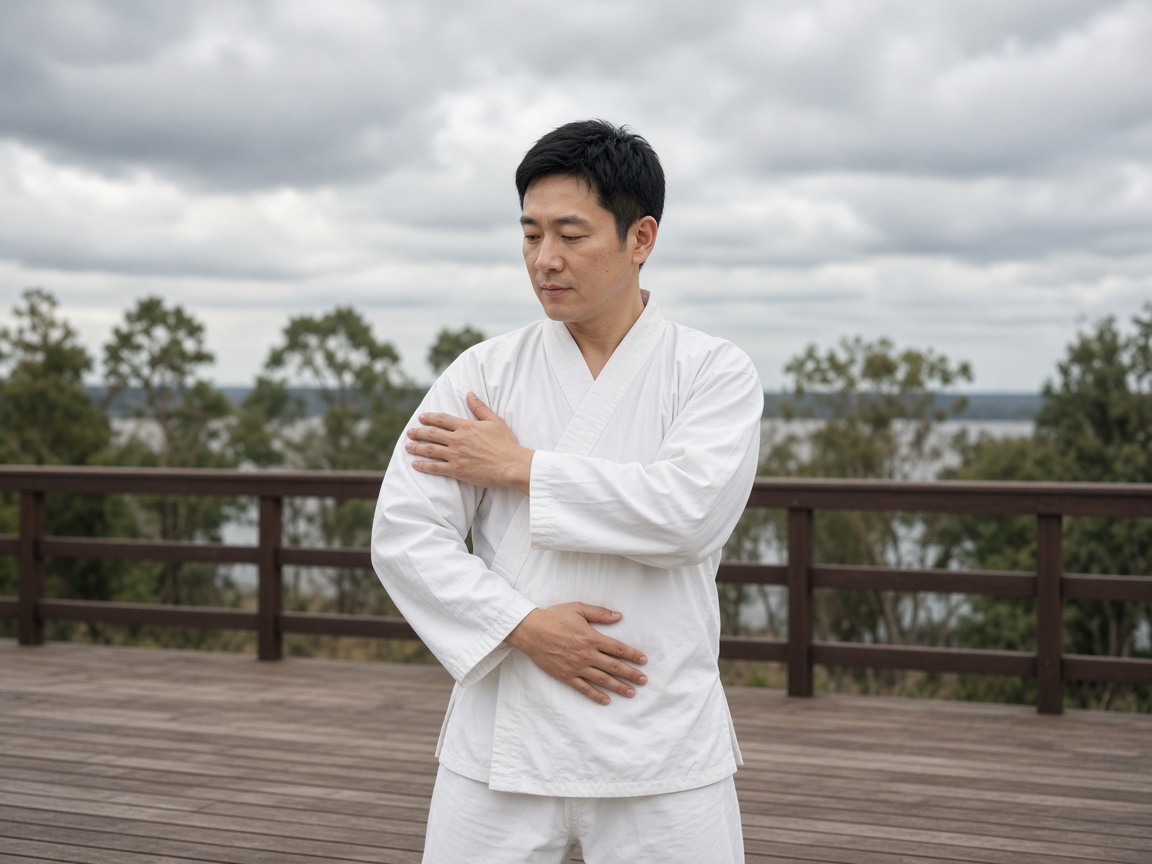
Light patting is a soft way to finish a practice or to move on a rest day. It is not a vigorous pounding. Keep an even rhythm, with no more force than you would use to dust off a coat.
Who it is for
- People who want another way to close a standing practice.
- Anyone who would rather not hold long stances, but still wants to move the limbs.
- Those who like a clear path, and can work through the arms, torso, and legs in turn.
A short at-home outline
Suggested time: About 10–20 minutes, which you can do in sections. Shorten the session or make the movements smaller if that suits you better today.
- Rub the palms warm. Pat lightly from one shoulder down the outside of the arm to the wrist, then back up the inside, and change sides.
- Pat the parts of the upper back you can reach, the sides of the waist, and the fronts of the thighs. Stay off the spine and bony points.
- If you include the calves, use an even lighter touch and work from the top down. Do not strike the joints.
- Stand or sit for a few slow breaths and notice whether the body feels a little warmer or looser than when you started.
Do not pat until you bruise or feel pain. Skip any area with broken skin, varicose veins, acute inflammation, or a clinician's advice to avoid percussion. If it does not feel right, return to ordinary massage or to breathing alone.
A note before you practice
The notes on this site are suggestions for gentle movement and breathing at home. They are for everyday activity only, and they are not a substitute for medical diagnosis, treatment, or rehabilitation.
If you have an injury, are pregnant, are recovering from surgery, or live with a chronic condition, please ask a qualified clinician before you decide whether to practice.
Stay in a comfortable range. Stop at once if you feel pain, dizziness, unusual shortness of breath, or any other unexpected discomfort.
How practice feels varies from person to person. Nothing here promises a particular result, and none of it should be read as a claim of treatment.