Practice guide
An Evening Wind-Down
Evening practice is a way to slow down, not another source of stimulation. Keep the light low, keep the movements small, and leave a little time at the end to sit or lie still. That is often more useful than rushing through a full sequence.
Who it is for
- People who still feel wound up at night and want a stretch of time away from a screen.
- Anyone who prefers light stretching after dark to vigorous activity.
- Those who already practice in the morning or during the day and want a quieter finish.
A short at-home outline
Suggested time: About 20–30 minutes, or 15 if that is all you have. Shorten the session or make the movements smaller if that suits you better today.
- Dim the lights and sit for a minute or two. Slow the breath and let the shoulders and jaw drop.
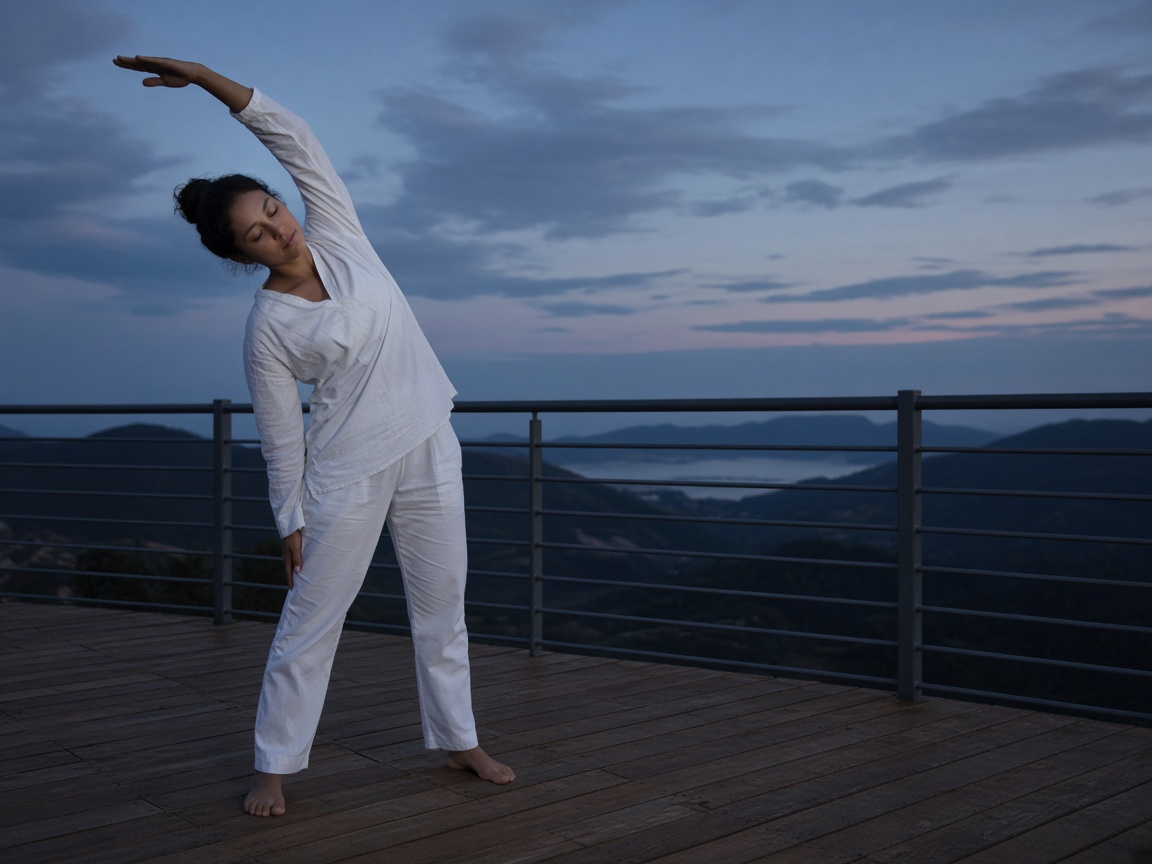
- Move the ankles, wrists, neck, and shoulders gently, then take a few shallow side stretches.
- Choose two or three slow standing or seated movements. Stay with each for several breaths, and avoid jumps or quick twists.
- Sit or lie down for three to five minutes. Let the exhale be a little longer than the inhale, then get ready to rest.
A wind-down can help the evening feel slower. It does not guarantee better sleep. If you have long-standing insomnia or take related medication, treat this as an ordinary habit and follow clinical advice.
A note before you practice
The notes on this site are suggestions for gentle movement and breathing at home. They are for everyday activity only, and they are not a substitute for medical diagnosis, treatment, or rehabilitation.
If you have an injury, are pregnant, are recovering from surgery, or live with a chronic condition, please ask a qualified clinician before you decide whether to practice.
Stay in a comfortable range. Stop at once if you feel pain, dizziness, unusual shortness of breath, or any other unexpected discomfort.
How practice feels varies from person to person. Nothing here promises a particular result, and none of it should be read as a claim of treatment.