Article
Knee and Lower-Back Care: A Few Habits for Home Practice
4 September 2026In home practice, the knees and the lower back are easy to overlook and just as easy to force. Many people do not do too many movements. They simply squat too deeply before they have found their balance, or they bend hard while the breath is still uneven. A few habits, set right first, make the practice itself safer.
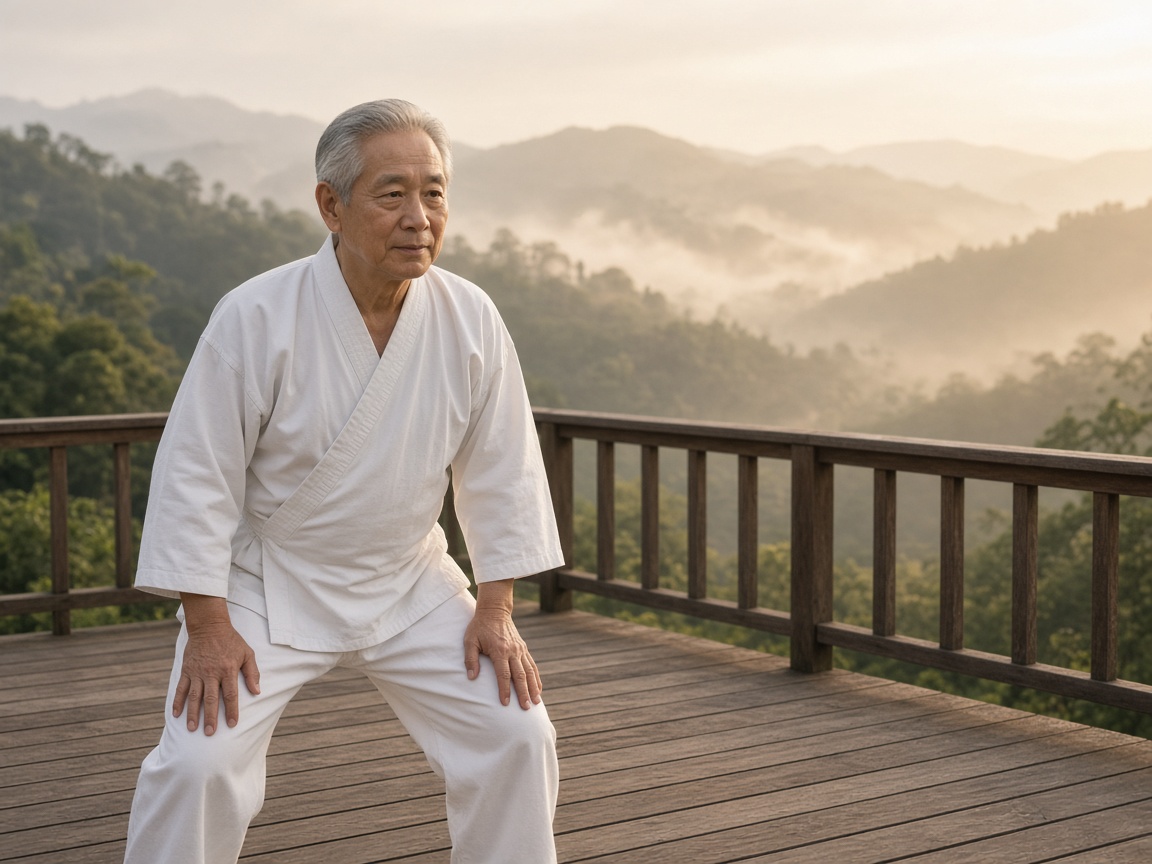
For the knees: when you bend, let the knees point toward the toes rather than falling inward. Stay in a range where you can still stand up easily and the legs are not shaking. Any movement that looks like a squat can first be a very shallow bend, or it can be done with a hand on a chair back. Bouncing, sudden force, and long holds in a squat are unnecessary for most home practice.
For the lower back: when you fold forward, soften the knees first so the movement can come from the hips, rather than pressing into the deepest part of the back. Keep breathing during side bends; do not twist while holding the breath. After a long time seated, walk a little before you practice. That is often more comfortable than trying to stretch the back the moment you stand up.
If a joint already feels unstable, swollen, or sends pain down the limb, that day is not a day for new movements. Choose a seated practice, some breathing, or rest. The steps in these guides are general suggestions for everyday activity. They are not a treatment for injury, and they do not replace a rehabilitation plan.
To put these habits into a short sequence, read “Gentle Knee Care at Home” and “Gentle Movement for the Lower Back.” If the neck and shoulders are tight as well, you can start with that shorter release.